Optimal lifelong learning from experience, reflection and ‘inner wisdom’: The four stages of the human lifecycle revisited (2026)
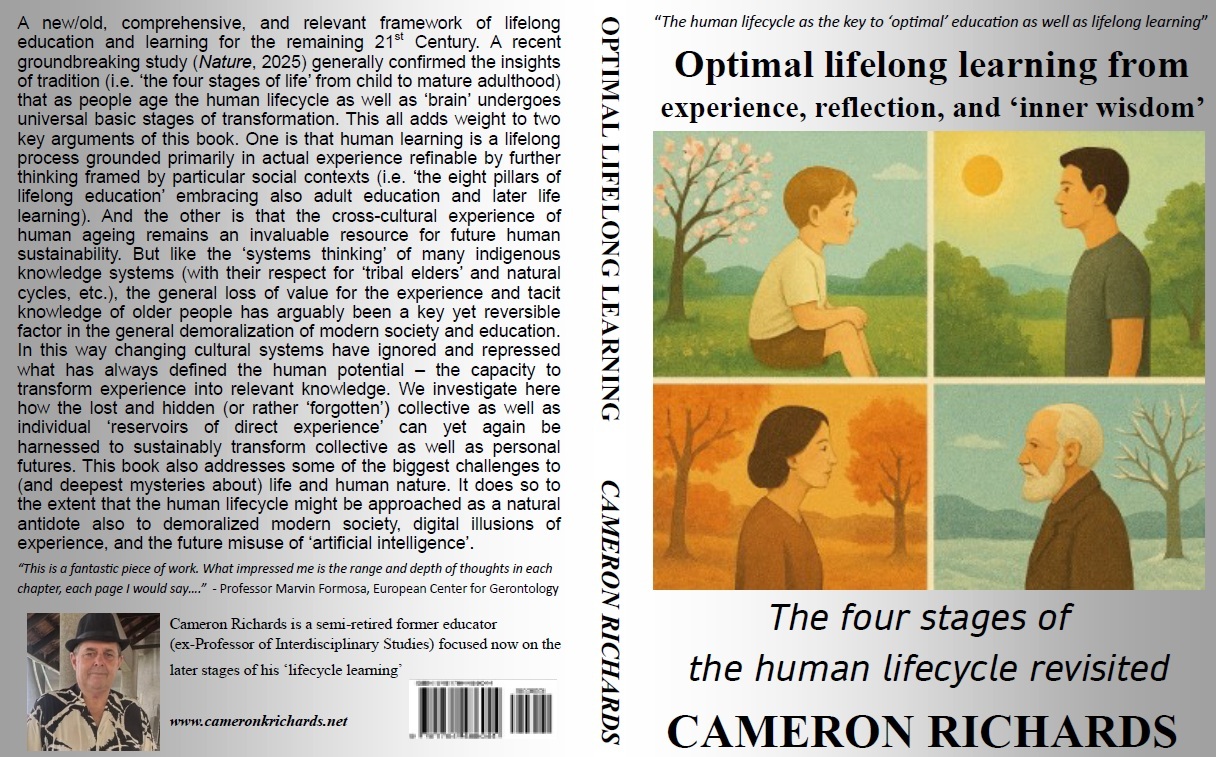
HARDCOPY FORMAT: 212 pages in A4 size (8.5 x 11ins/ 210x 297 mm)
ISBN 978176488006 (eBook), 978176488013 (paperback), 978176488020 (hardback)
BUY HERE (as US$12 pdf eBook) at Wild Dingo Works global store
Want to checkout first? DOWNLOAD A FREE SAMPLE HERE
To buy the paperback (US$20) at Amazon click HERE and the hardcover (US$30) at HERE
(Can be purchased at Amazon stores in other countries in local currencies). To add an ‘Amazon Review’ click HERE
[Also published with Ingram Sparks so that can be ordered with them directly or through bookshops and libraries with provided ISBN numbers]
SUBJECTS: 1.lifelong learning 2. lifelong education 3. the human lifecycle 4. life reviews 5. 21C knowledge society 6. university of the third age 7. global knowledge convergence
OVERVIEW :
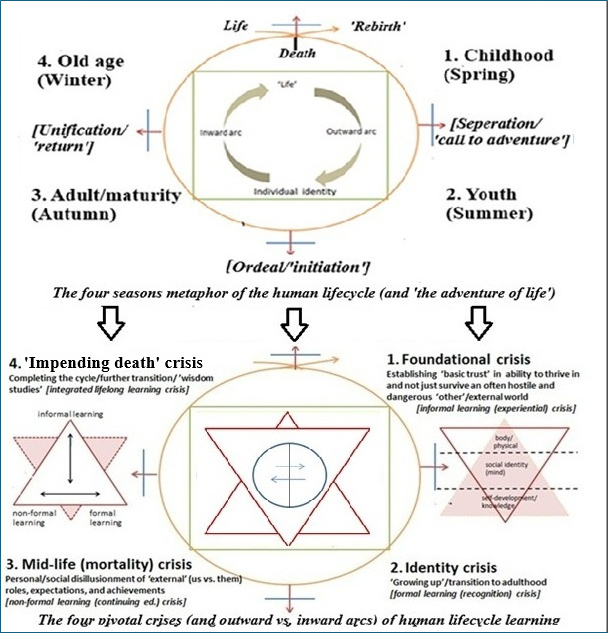
A new/old, comprehensive, and relevant framework of lifelong education and learning for the remaining 21st Century. A recent groundbreaking study (Nature, 2025) generally confirmed the insights of tradition (i.e. ‘the four stages of life’ from child to mature adulthood) that as people age the human lifecycle as well as ‘brain’ undergoes universal basic stages of transformation. This all gives weight to two key arguments of this book. One is that human learning is a lifelong process grounded primarily in actual experience refinable by further thinking framed by particular social contexts (i.e. ‘the eight pillars of lifelong education’ embracing also adult education and later life learning). And the other is that the cross-cultural experience of human ageing remains an invaluable resource for future human sustainability. But like the ‘systems thinking’ of many indigenous knowledge systems (with their respect for ‘tribal elders’ and natural cycles, etc.), the general loss of value for the experience and tacit knowledge of older people has arguably been a key yet reversible factor in the general demoralization of modern society and education. In this way changing cultural systems have ignored and repressed what has always defined the human potential – the capacity to transform experience into relevant knowledge. We investigate here how the lost and hidden (or rather ‘forgotten’) collective as well as individual ‘reservoirs of direct experience’ can yet again be harnessed to sustainably transform collective as well as personal futures. This book also addresses some of the biggest challenges to (and deepest mysteries about) life and human nature. It does so to the extent that the human lifecycle might be approached as a natural antidote also to demoralized modern society, digital illusions of experience, and the future misuse of AI.
CONTENTS :
| Introduction: A model of lifelong learning from experience to transform modern education and society? |
Part A – The human lifecycle and the four stages of optimal lifelong learning from experience
|
Part B – Seniors and modern variations of the traditional ‘tribal elder’ role? Life as a never-ending opportunity to learn, to explore, and to achieve self-knowledge
|
Part C – Lifecycle learning in 21C cross-cultural contexts
|
Part D. Optimal lifelong learning for 21C knowledge building and global knowledge convergence?
|
FURTHER REFLECTION
|
| REFERENCES |