Words, Ideas, and Optimal Knowledge-Building: A ‘foolproof’ self-help guide to academic (and other) thinking, writing, and problem-solving inquiry (2026)
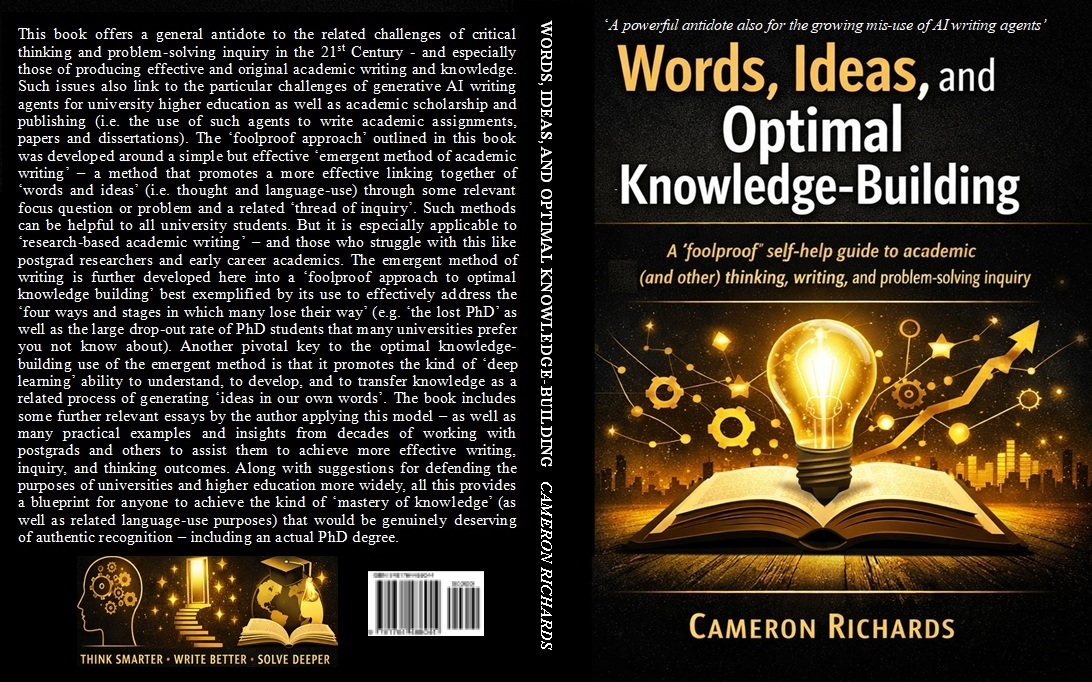
HARDCOPY FORMAT: 264 pages in A4 size (21 X 28 cm)
ISBN: EBOOK ((978-1-7644880-3-7) PAPERBACK (978-1-7644880-4-4) & HARDBACK (978-1-7644880-5-1)
To get the $9.99 E-book version go to https://www.amazon.com.au/dp/B0GQ8T2VFG And to buy the paperback or hardback versions go to https://www.amazon.com.au/Words-ideas-optimal-knowledge-building-problem-solving/dp/1764488040/
DOWNLOAD A FREE SAMPLE VERSION HERE :https://drive.google.com/file/d/1u45Yeh48u3nh2BlsHm-wdGRHu1Gdq4q_/view
CHECK OUT PUBLISHED REVIEWS OF THIS BOOK https://drive.google.com/file/d/10IbNdZqpcVQZu57tEKhlju4bEoyr_VKL/view
TO ADD A REVIEW AFTER READING GO TO : https://www.amazon.com/review/create-review?&asin=1764488040
OVERVIEW :
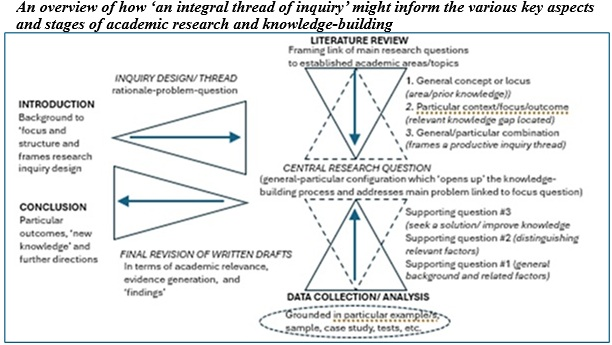
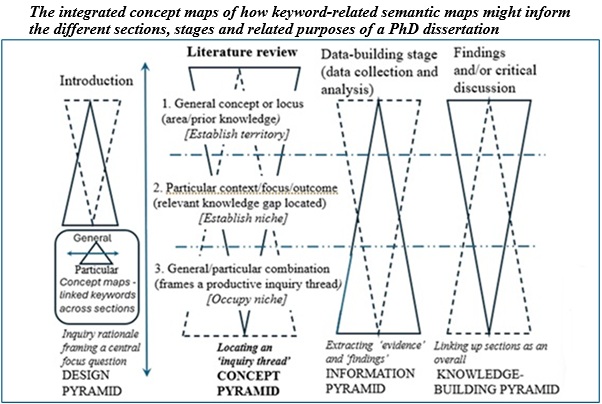
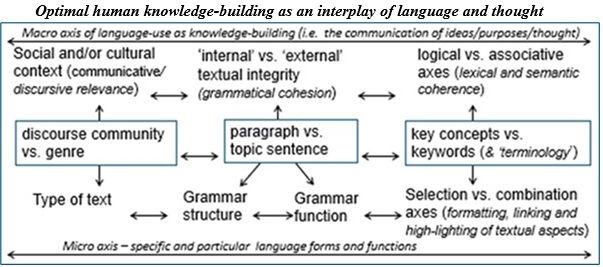
The book offers a general antidote to the various challenges of producing effective academic writing and knowledge that have recently culminated in the direct threat of generative AI writing agents to university higher education as well as academic scholarship and publishing (i.e. the use of such agents to write academic assignments, papers and dissertations). This is developed around a simple but effective ‘emergent method of academic writing’ – a method that promotes a more effective linking together of ‘words and ideas’ (i.e. thought and language-use) through some relevant focus question or problem and a related ‘thread of inquiry’. This method can be helpful to all university students. But it is especially applicable to ‘research-based academic writing’ – and those who struggle with this like postgraduate researchers and early career academics. The emergent method of writing is further developed here into a ‘foolproof approach to optimal knowledge building’ best exemplified by its use to effectively address the ‘four ways and stages in which many lose their way’ (i.e. ‘the lost PhD’ as well as the large drop-out rate of PhD students that many universities prefer you not know about). Another pivotal key to the optimal knowledge-building use of the emergent method is that it promotes the kind of ‘deep learning’ ability to understand, to develop, and to transfer knowledge as a related process of generating ‘ideas in our own words’. The book includes some further relevant essays by the author applying this model – as well as many practical examples and insights from decades of working with postgrads and others to assist them to achieve more effective thinking, writing, and inquiry outcomes. Along with suggestions for defending the purposes of universities and higher education more widely, all this provides a blueprint for anyone to achieve the kind of ‘mastery of knowledge’ (as well as related language-use purposes) that would be genuinely deserving of authentic recognition – including an actual PhD degree.
CONTENTS :
| 1. Introduction: The 21st Century ‘publish or perish’ challenge to human knowledge? |
| Part A. Words, ideas, and optimal-knowledge-building 2. Words, ideas, and optimal-knowledge-building as ‘deep learning’: Elements of an emerging ‘foolproof approach’ to academic writing and research (etc.) |
| Part B. A ‘foolproof self-help guide’ to remedying the four ways and stages in which inexperienced academic researchers and (other) writers so often ‘get lost’ 3. The ‘lost PhD’: The related four key ways and stages that postgraduates (and others) ‘get lost’ in the research-based academic writing process 4. The relevance of the emergent method of academic writing for knowledge-building 5. The foolproof approach to research-based academic writing as an antidote for the key symptoms of a ‘lost PhD’ |
| Part C. Related essays 6. Towards a more sustainable model of academic knowledge building linked to organizational change in higher education 7. Re-framing ‘Academic English’: The teaching and learning of academic writing in ESL and intercultural as well as native speaker contexts?] 8. The still important role of the ‘humanities’(also) in the future Asian Pacific university 9. Sustainable 21st Century policy building: Innovative design and learning solutions to policy research challenges 10. Higher education ‘marketisation, privatisation, and internationalisation’: Singaporean vs. Malaysian models of the Asian higher education hub policy? |
| Part D. Example of a PhD design using the ‘foolproof’ approach and related emergent methods 11. The challenge of refining WTO e-commerce policies to be more relevant to emerging economies (a ‘supervisory collaboration’ 12. ‘Optimal grounded theory’? Words, ideas, and optimal policy building as an adaptation of grounded theory |
| References |