A brief bio of my cousin P.R. Stephensen, another descendant of Henry Tardent
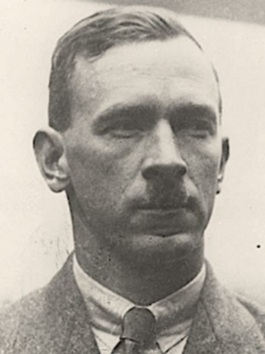
P.R. (Inky) Stephensen in a photo taken around 1940
P.R.(Inky) Stephensen (1901-1965) [eldest grandson of my 2 X great-grandfather Henry Tardent 1853-1929 – see my book ‘Exploring ancestral memories and “lost family histories”] was a significant Australian writer, publisher and political activist. He was born in Biggendon, Queensland, and first went to school in the neighbouring town of Bellingin. From Bellingen primary school he went to Maryborough Boys Grammar and then to UQ where he completed a BA before winning a Rhodes Scholarship to Oxford University in 1924. In England after graduating from Oxford he created Franfrolico Press (and two related magazines Vision and The London Aphrodite) with a friend from UQ who joined him in England – Jack Lindsay, the son of famous Australian artist Norman Lindsay. Along with Lindsay, Stephensen mixed with well-known political and literary as well as cultural circles in England and London. He was close friends in particular with the following three famous writers – D.H. Lawrence (editing and publishing the uncensored version of Lawrence’s controversial ‘Lady Chatterley’s Lover’) [the focus of a famous legal action against censorship], Aldous Huxley (the model for a key character in one of Huxley’s novels), and Aleister Crowley (writing himself perhaps the only critically balanced study at that time of Crowley’s famous and also infamous writings and activities).
When he returned to Australia, Inky set up a publishing press with an agenda to encourage Australian writers and promote an authentic local culture. His most famous and influential book was the seminal Foundations of Culture in Australia published in 1936 (which also directly influenced the similarly influential Jindyworobak movement in the late 1930s). He was the editor (and known ‘re-writer’) as well as publisher of Xavier Herbert’s influential Capricornia – and the publisher of many significant emerging Australian writers at this time including Miles Franklin. He supported Aboriginal rights and personally helped fund the first Aboriginal publication The Abo Call by activist Jack Patten. As WW1 approached Inky got involved in politics with an investor and partner W.J. Miles. They created the magazine The Publicist also supporting a political party founded by Inky called Australia First in late 1941 – with an agenda well ahead of its time to make Australia truly independent after the war (including from the USA and the UK).
As depicted in Craig Munro’s 1984 biography Wild Man of Letters: The story of P.R. Stephensen (and several other relevant books and critical articles), the war enabled Inky’s enemies to intern him (and initially 50 other ‘British Australians’) without any real scrutiny for the rest of the war on trumped up charges of being a threat to national security. These were demonstrably false charges that were never tested or proven because of war-time suspension of legal process and democratic practices. During this time and afterwards he became the ghost writer of apparently 70 books attributed to Frank Clune about Australian outback life. He also wrote a seminal book on the history of Sydney Harbor that was published the year following his death of a heart attack after finishing a speech in 1965. A known ‘communist’ in his youth, he was later accused of being a ‘right wing political activist’ beyond his Australia First activities – both of which I and others believe to be a most unfair misrepresentation of his fundamentally ‘cultural’ views and activities in life.
Related excerpt from my book Exploring Ancestral Memories and ‘Lost Family Histories’ (2025) pp. 117-118.
It was not just my grandmother Irene Tardent Murray, but her uncle (Tardent family historian Jules Tardent) who got me fascinated about my Tardent ancestry in my youth. ‘Uncle Jules’ would regularly turn up on Sundays at Irene’s house on the Gold Coast at a time I was also regularly visiting on weekends (out for the day or weekend from boarding school there). After inheriting ‘the 500 plus years Swiss family tree’ from his father Henri (Henry) Alexis Tardent, Jules was instrumental in finally getting this published in 1982 as part of a family history (after a co-authored 1972 genealogy version only) that made particular use of Henry’s related writings – including the history of himself and family after arriving in Australia in 1887. Henry’s various writings (especially his 1987 letter to other Tardent descendants) were fascinating and well-written. But it was Henry’s own story as a new migrant to Australia with his growing family in 1887 from the Swiss Colony in Russia (Shabo – the later name for the town initially given the Russian name of Chabag) that particularly struck me.
This was especially so after two related events when I went to the University of Queensland (1980-1982) to study after school. One was fortuitously getting to know Max Brandle (then also the Director of UQ’s Institute for Modern Languages) as the ‘flat mate’ of a good friend of mine – and then finding out later that he was writing an article on Henry Tardent for a book [The Queensland Experience: The Life and Work of 14 Remarkable Migrants (1991)] as well as an edited book on Henry’s written essays 1916-1927 to the Lausanne Gazette [Letters from Australia). The other event was becoming fascinated by the related story of Percy (Inky) Stephenson (pic left), the brother of the ‘editor’ of Jules’ book Ros Stephenson who also lived on the Gold Coast. Ros introduced me to the UQ Press editor Craig Munro who was also writing a book on ‘Inky’ during my university years (Wild Man of Letters: The story of P.R. Stephensen [1984])