A short bio for Cameron Richards
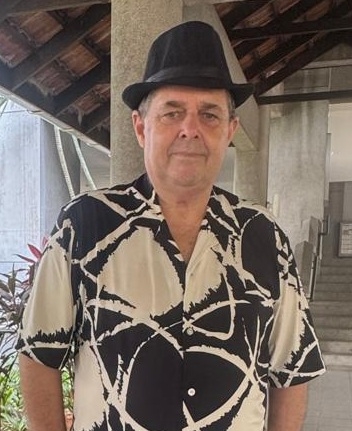 Cameron Richards is a semi-retired Australian professor of interdisciplinary studies with extensive experience in the Asia-Pacific region – including at QUT, Nanyang Uni. Singapore, Hong Kong Institute of Education, University of Western Australia, UTM in Malaysia and Chulalongkorn University in Thailand. He has a multi-disciplinary background for a current/future focus on sustainability studies, policy research, academic research and writing methodology, leadership and organizational learning, educational technologies, intercultural communication, curriculum innovation, lifelong learning, and new literacies (etc).
However, in his semi-retirement his other main interest (besides ‘community advocacy’ and ‘seniors lifelong learning’) has been family history and related genealogical research and writing. His recent works Prosperous: The Kennedy Murrays and the origins of historic Evandale in early Colonial Australia (followed also in 2025 by Exploring Ancestral Memories and ‘Lost Family Histories) has re-awakened his initial career focus on and interest in Australian (and world) cultural history. He plans to transform some of his early writings in this area into several upcoming books under the banner of ‘Australiana’.
Likewise, he plans to convert some of his earlier educational, philosophical and general ‘knowledge-building’ interests (also in ‘critical thinking for the 21st Century’ etc.) into some related publications. For the last few decades his writings and related ‘thinking’ (since 1999) have generally subscribed to the projection notion of a ‘21st Century knowledge-building’ model – a model recognising the transformative ‘deep learning’ process by which all knowledge can and should be generated grounded in human ‘experience, reflection and “inner wisdom”’. First then in this planned series (provisionally titled 21st Century knowledge building for future global sustainability’ series is his new book The Four Stages of the Human Lifecycle Revisited: Optimal lifelong learning from experience, reflection and “inner wisdom”.
This will be following in the coming year by Words, ideas, and optimal knowledge-building: A ‘foolproof’ self-help guide to academic (and all other) thinking, writing, and problem-solving inquiry. The ‘foolproof method’ also outlined in this book describes how the design of a relevant problem framed as a particular ‘focus question’ provides the key to an integrated ‘thread of inquiry’ – which effectively links up the different stages and parts of the knowledge-building process (including in all modes of academic research and writing).